Brugada Syndrome

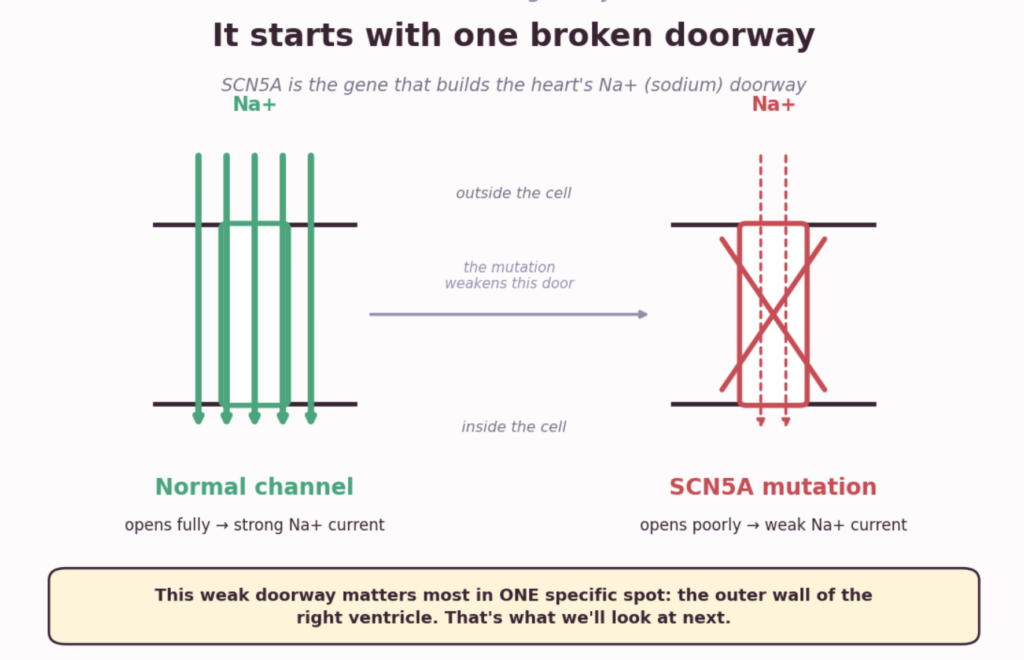
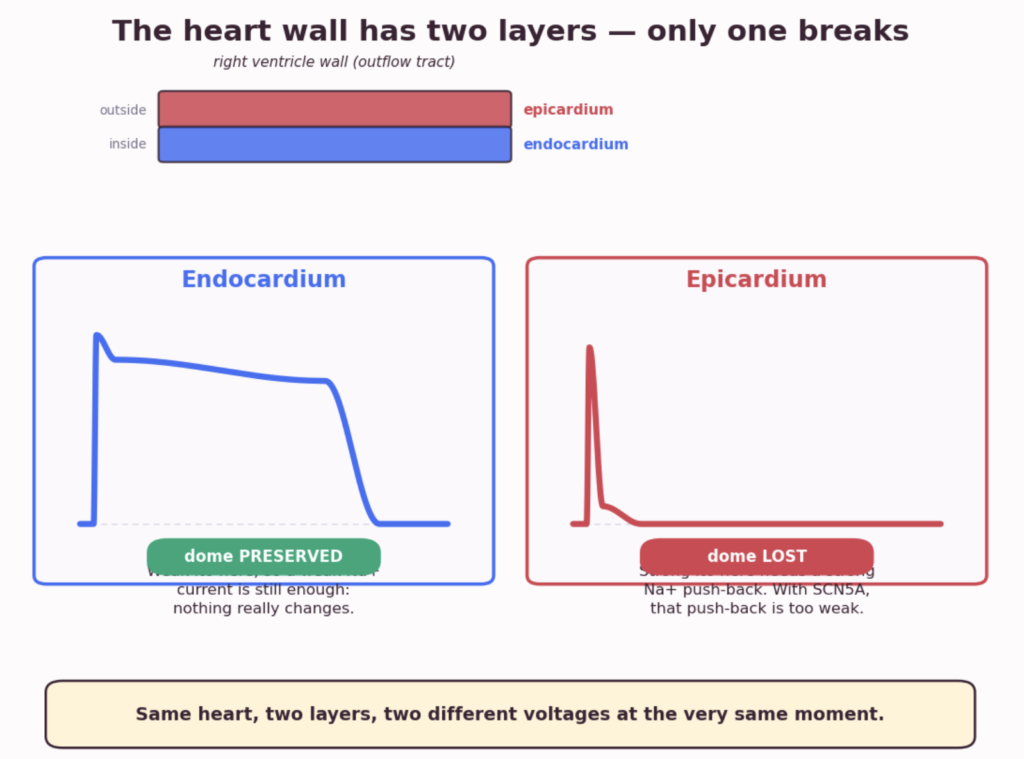
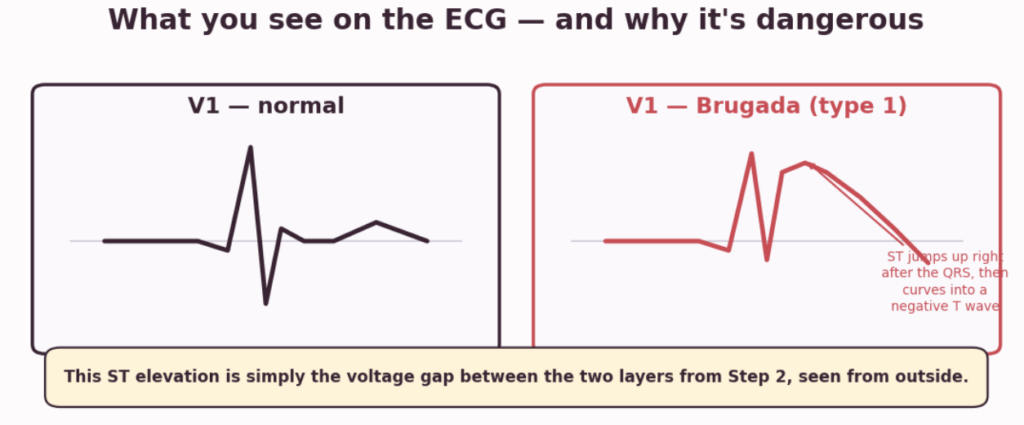
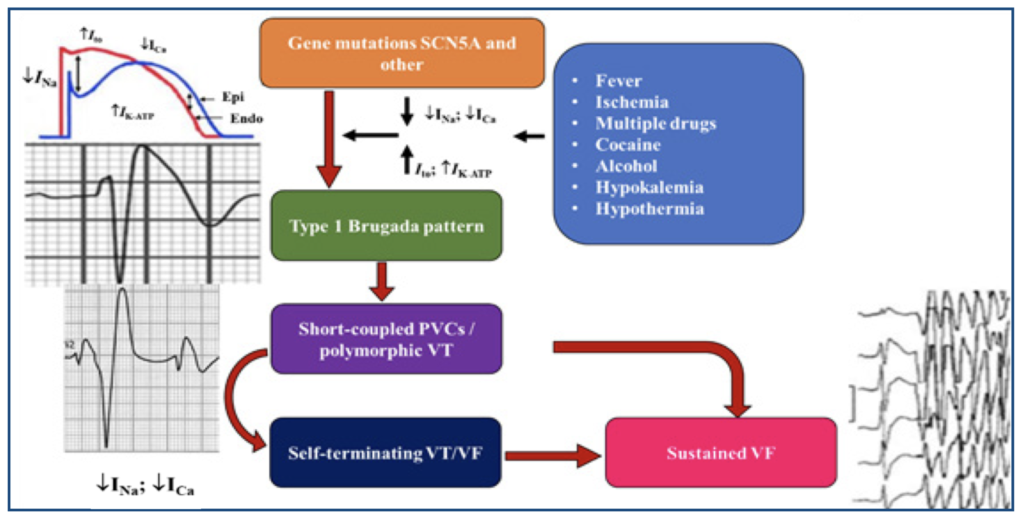
1. Physiology

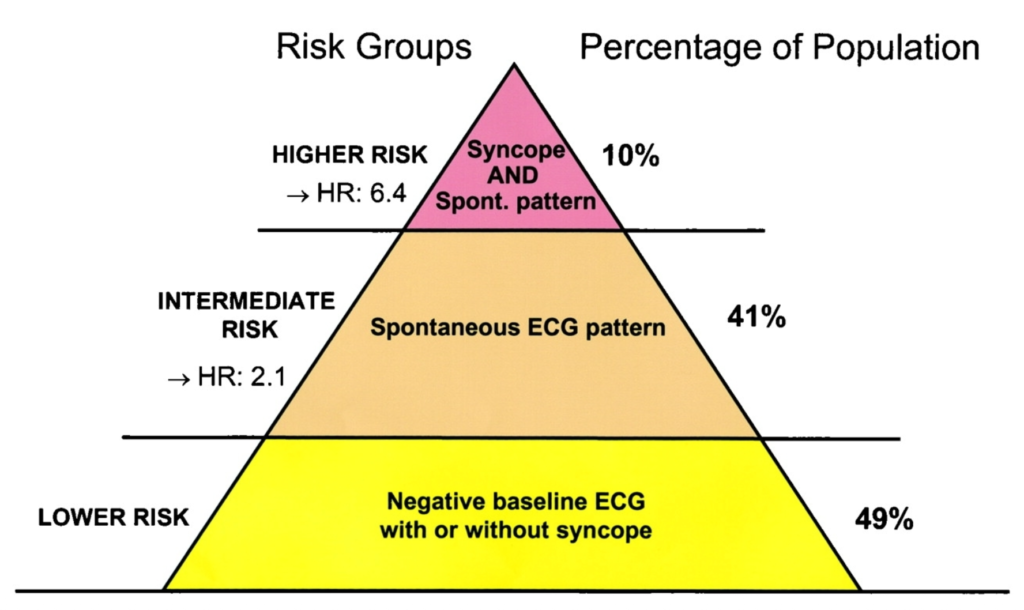
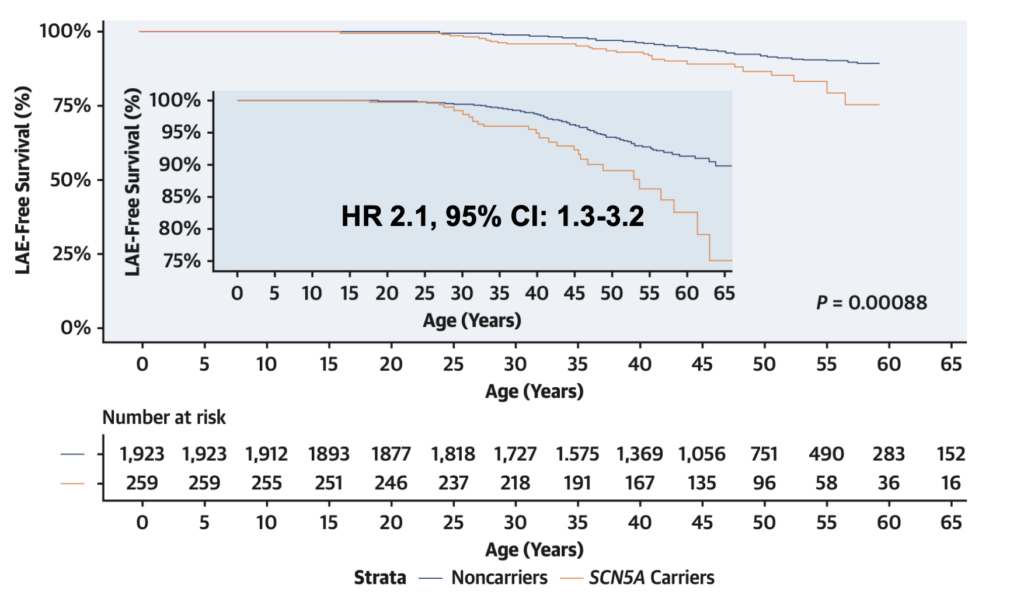
2. Risk stratification

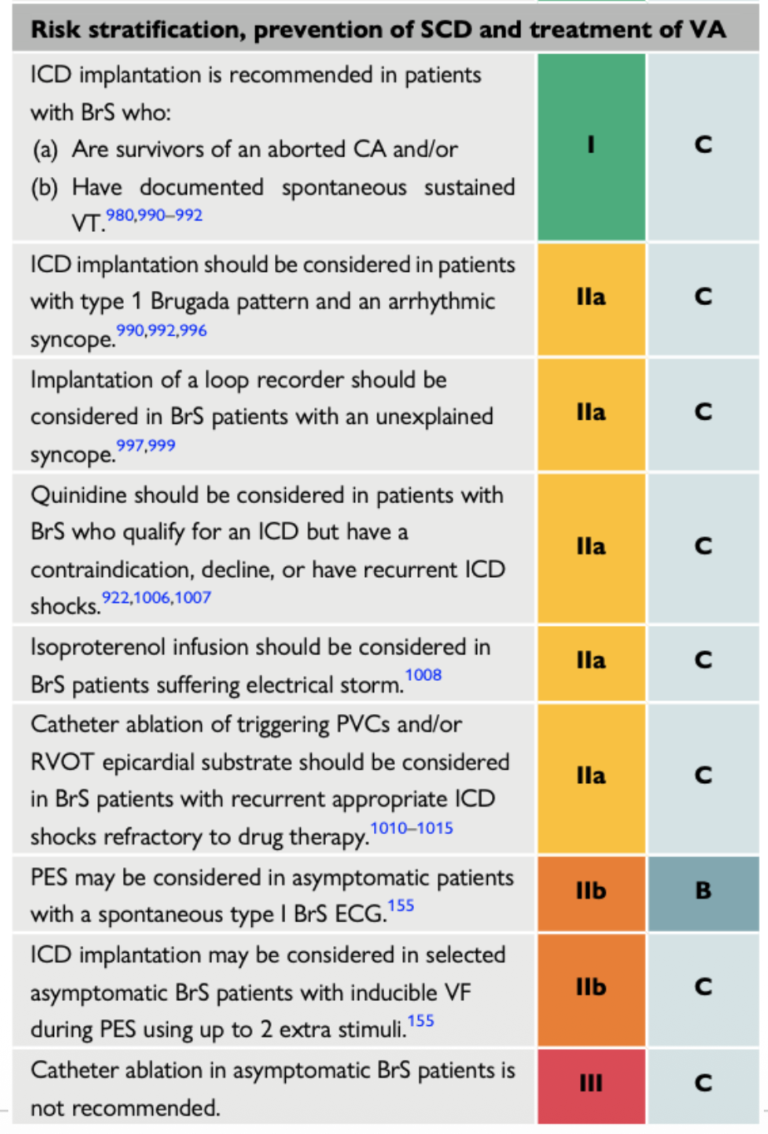
3. Treatment

  1. Avoid fever
  2. Avoid ethanol, cocaine, psychotropic drugs, AADs
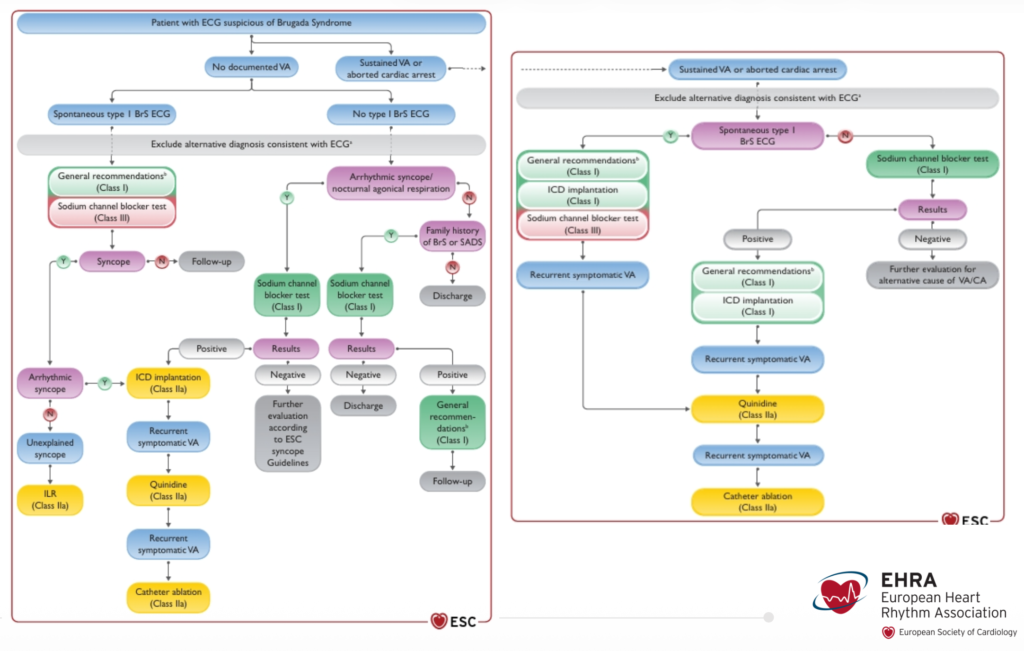
  3. Electrical storm : Isoprenaline infusion
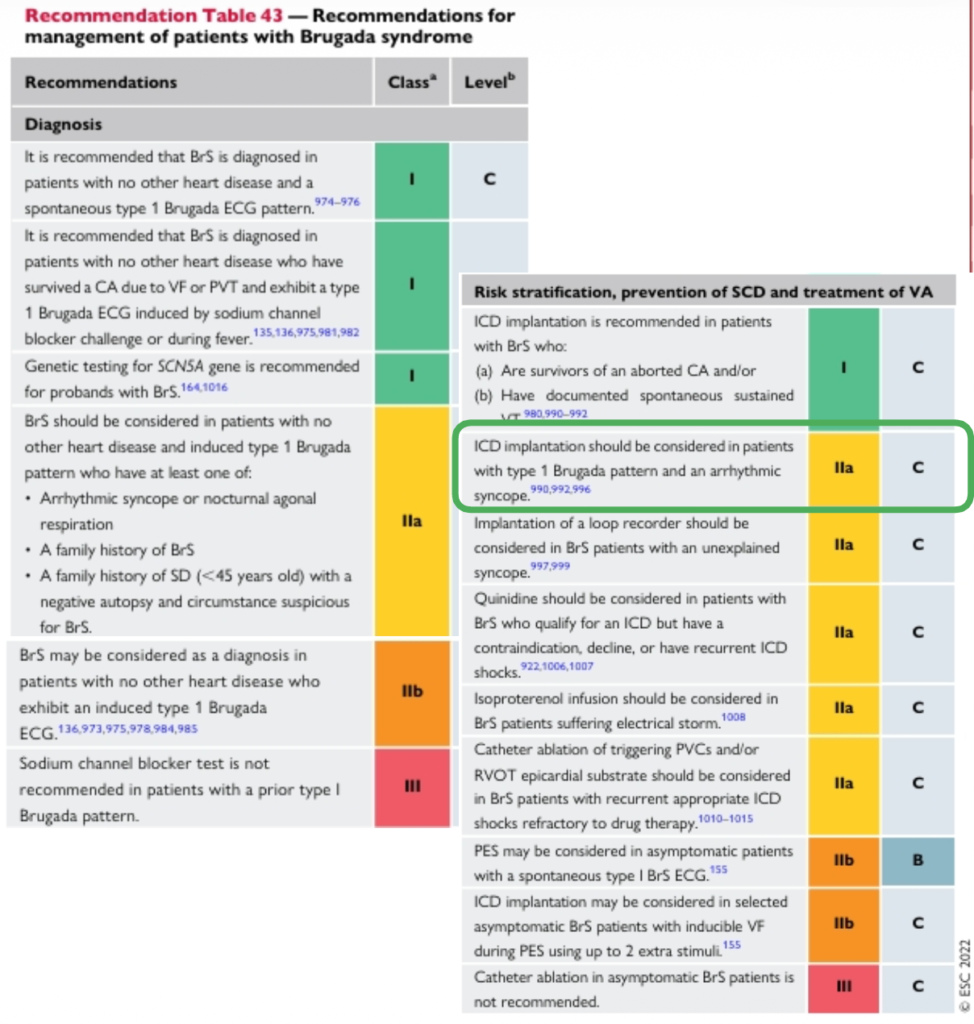
  4. ICD implantation : after aborted cardiac arrest, type I + arrhythmic syncope
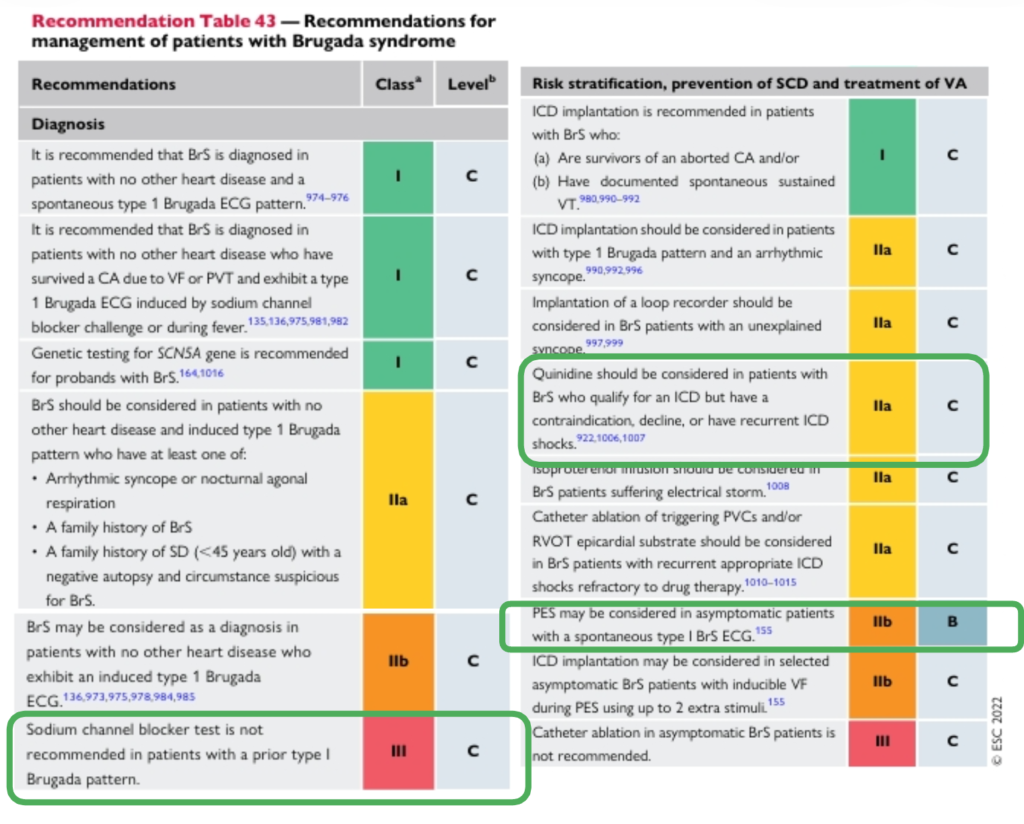
  5. Quinidine if ICD not possible, or if recurrent VF
  6. Catheter ablation if repeated ICD shocks

4. Study cases

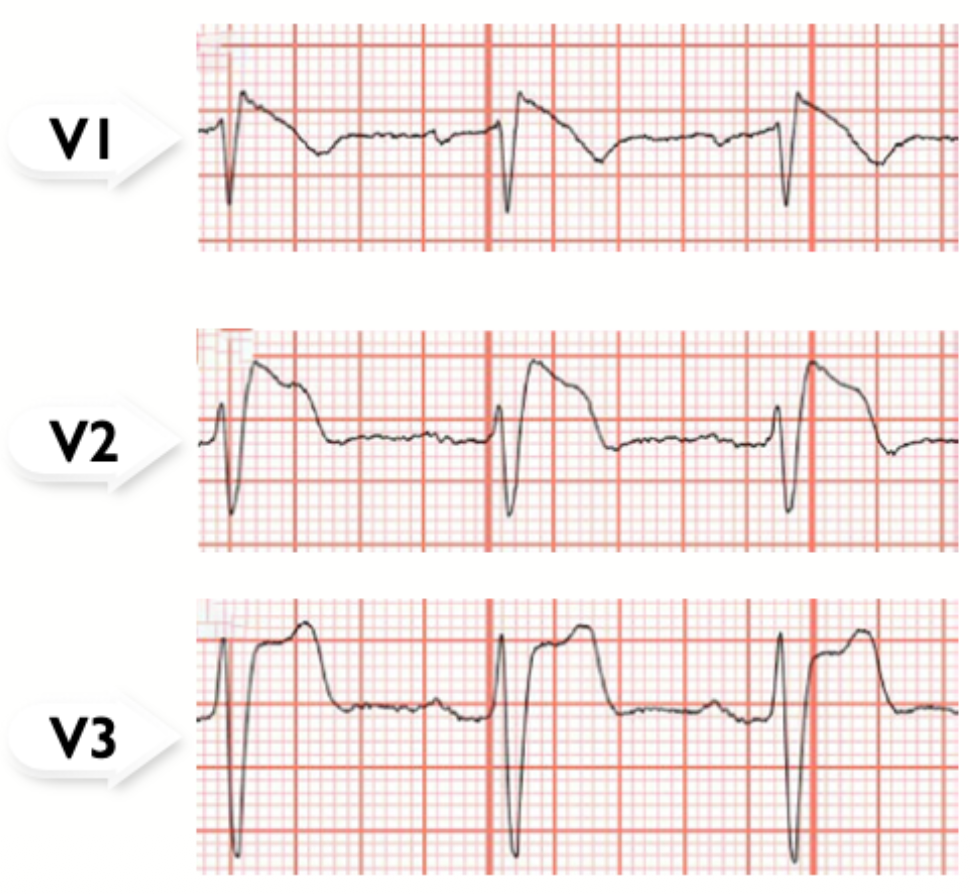
A 37 year old man is seen due to an episode of syncope. His ECG is show below. Structural heart disease and non-arrythmic causes of syncope were carefully ruled out. Which of the following is correct regarding the recommended treatment approach?


A. Electrophysiologic study for further risk stratification


B. CAG and an acetylcholine provocation test


C. MRI to rule out HCM


D. ICD implantation


E. Treatment with quinidine should be initiated

Which of the following recommendations apply to adult Brugada syndrome patients?


A. Quinidine should be considered in recurrent symptomatic paroxysmal atrial fibrillation.


B. Quindine should be considered in asymptomatic patients with type 1 ECG pattern and positive genetic test.


C. Programmed ventricular stimulation is recommended in asymptomatic patients with drug induced type 1 Brugada ECG.


D. Quindine is recommended in patients with type 1 ECG pattern and history of syncope.


E. Flecainide should be considered in recurrent symptomatic paroxysmal atrial fibrillation

in the abscence of systolic dysfunction.

A 35‑year‑old man without structural heart diseasenundergoes a drug challenge and exhibits a type 1 Brugadan ECG pattern.

Which feature would strengthen the suspicion of Brugada syndrome requiring further evaluation?


A. Presence of atrial fibrillation


B. A family history of Brugada syndrome or sudden death <45 years


C. Baseline QTc >500 ms


D. Asymptomatic right bundle branch block


E. Left ventricular hypertrophy on echocardiography

ESC guidelines propose that BrS should be considered in patients with an induced type 1 pattern when they have arrhythmic syncope or nocturnal agonal respiration, a family history of BrS, or a family history of sudden death at <45 years. SCN5A genetic testing is recommended in probands.

A 40‑year‑old man with Brugada syndrome and an ICD experiences recurrent appropriate shocks for ventricular fibrillation despite quinidine therapy. According to ESC guidelines, what additional intervention should be considered?


A. Increase ICD shock energy


B. Catheter ablation of triggering PVCs or right ventricular outflow tract epicardial substrate


C. Long‑term amiodarone therapy


D. Routine isoproterenol infusion


E. Subcutaneous ICD implantation instead of transvenous ICD

Catheter ablation of triggering PVCs or right ventricular outflow tract epicardial substrate

-> In BrS patients with recurrent appropriate ICD shocks that are refractory to drug therapy, ESC guidelines state that catheter ablation of triggering premature ventricular complexes and/or the right ventricular outflow tract epicardial substrate should be considered.