Clinical Supra-Ventricular Tachycardia

⚡️ Ready to flex your electrophysiology muscles? 💪


I’ll show you various ECG scenarios 🫀📈, and it’s your turn to crack the electrophysiology mystery! 🕵️‍♂️🔍


Think you’ve got what it takes to solve these rhythm riddles? 🤔🎯

Case 1

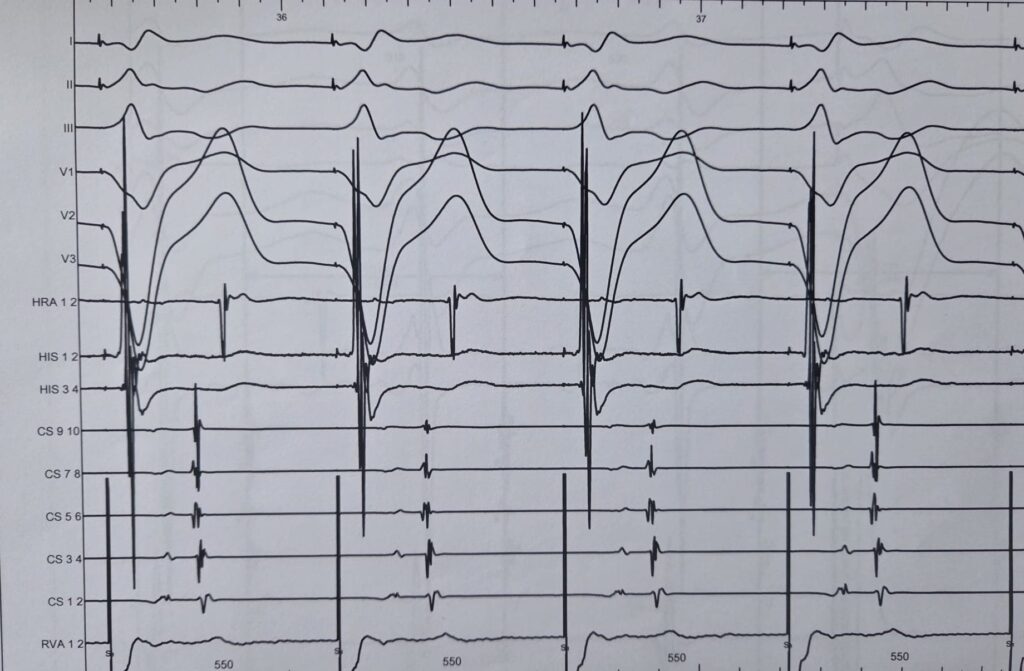
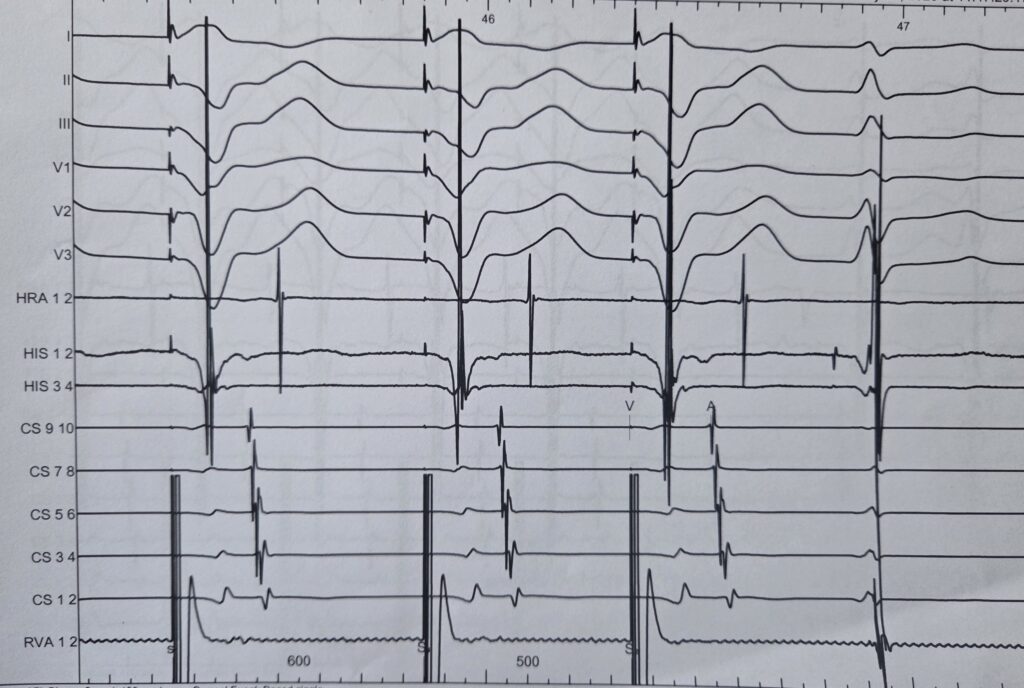
👀 First, check out the morphology of the first two QRS complexes—they’re wider (muscle capture) than the last two (His bundle capture).

📏 Then notice the RP interval: it’s longer when we capture the muscle compared to when we capture the His bundle.

This is a normal response, indicating that the patient likely doesn’t have a para-Hisian accessory pathway. 🫀⚡️

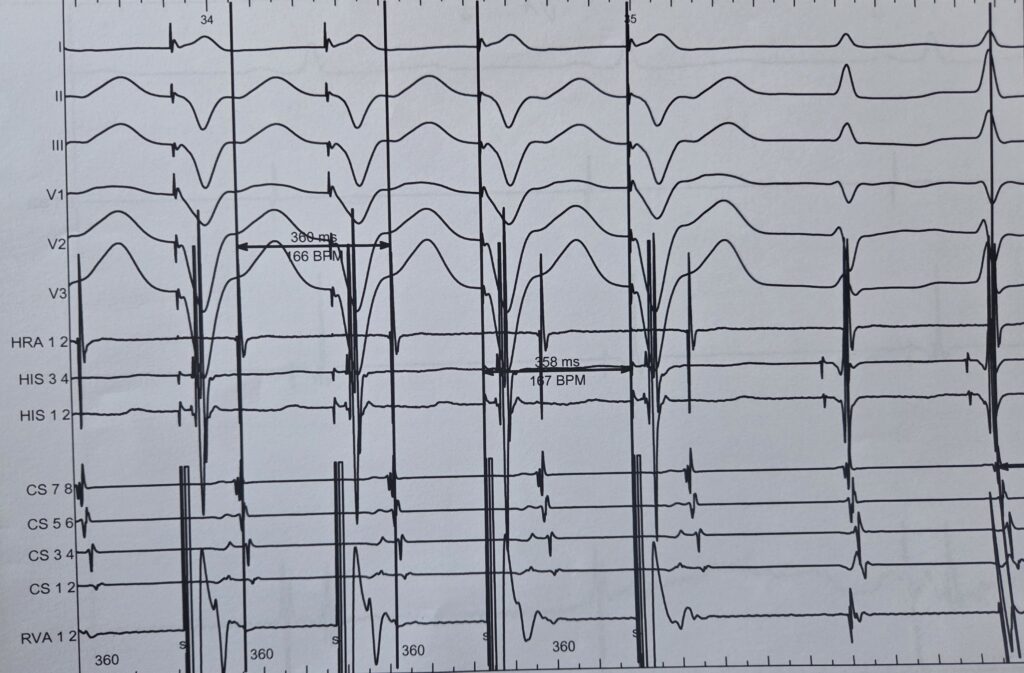
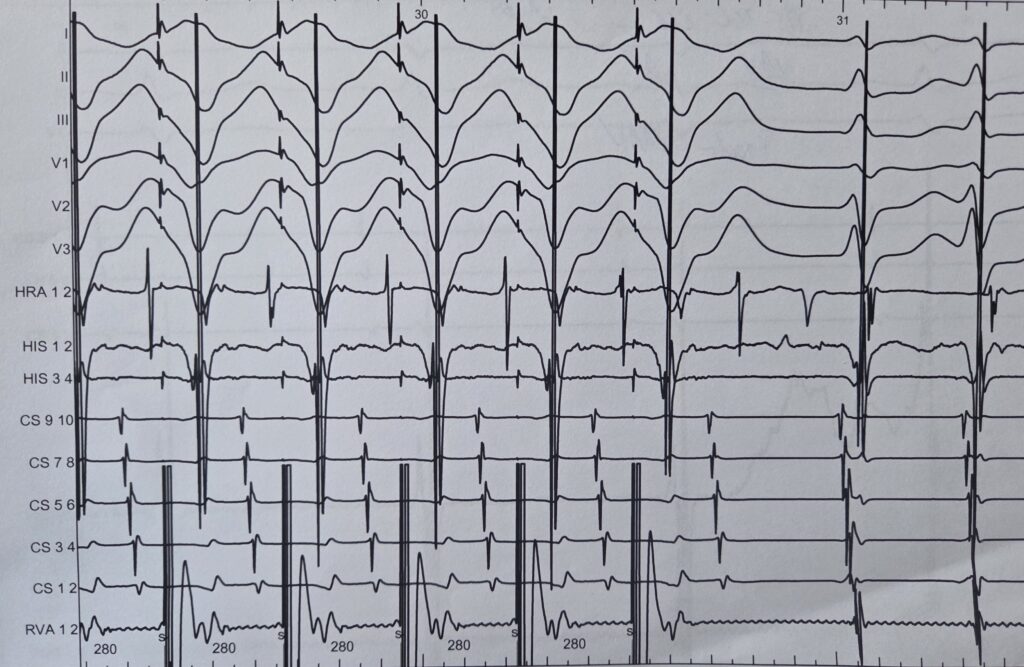
👀 Here’s what we’re seeing in this tracing:

1️⃣ Tachycardia analysis:
Look closely at the last two QRS complexes—the RP interval is super short, strongly suggesting AVNRT. 🔎🫀

2️⃣ Ventricular pacing check:
We’re pacing from the ventricle and clearly entering the node. Notice the ventricular interval matches the atrial interval—we’ve definitely engaged the tachycardia! ✅
When we stop pacing, we see a V-A-V response, typical of AVNRT or AVRT. ⚡️

3️⃣ Post-Pacing Interval (PPI):
Calculating “PPI minus tachycardia cycle length,” we find it’s > 110 ms, favoring AVNRT rather than AVRT. 📏⏱️

👉 Putting it all together, we’re clearly dealing with an AVNRT! 🎯

Case 2

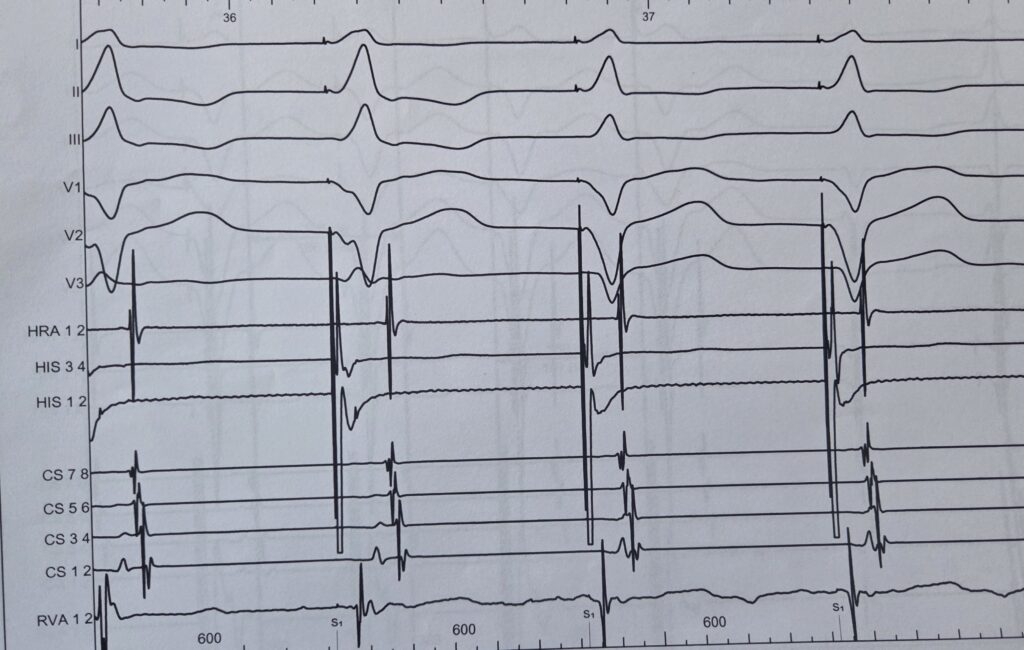
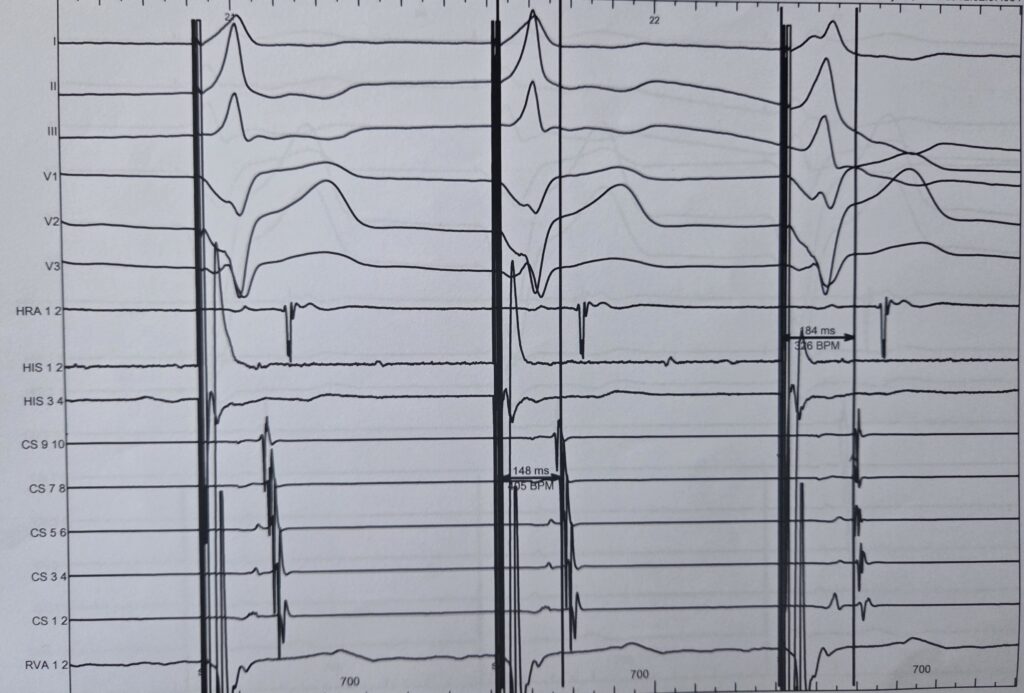
We are pacing the ventricule and after the S2 you see a ventricular echo beat !

👀 Here’s what we’re seeing in this tracing:

1️⃣ Tachycardia analysis:
Look closely at the last two QRS complexes—the RP interval is super short, strongly suggesting AVNRT. 🔎🫀

2️⃣ Ventricular pacing check:
We’re pacing from the ventricle and clearly entering the node. Notice the ventricular interval matches the atrial interval—we’ve definitely engaged the tachycardia! ✅
When we stop pacing, we see a pseudo V-A-A-V the last A cannot entrain the last V, typical of AVNRT or AVRT. ⚡️

3️⃣ Post-Pacing Interval (PPI):
Calculating “PPI minus tachycardia cycle length,” we find it’s > 110 ms, favoring AVNRT rather than AVRT. 📏⏱️

👉 Putting it all together, we’re clearly dealing with an AVNRT! 🎯

Case 3

👀 Here’s what we’re seeing in this tracing:

Ventricular pacing check:
We stimulated at 700 ms ⚡️ and observed that activation was concentric for the first and second paced QRS complexes ✅. However, for the third paced QRS, activation within the coronary sinus became eccentric 🔄, starting from CS 5-6 📍.

-> It suggest an accessory pathway
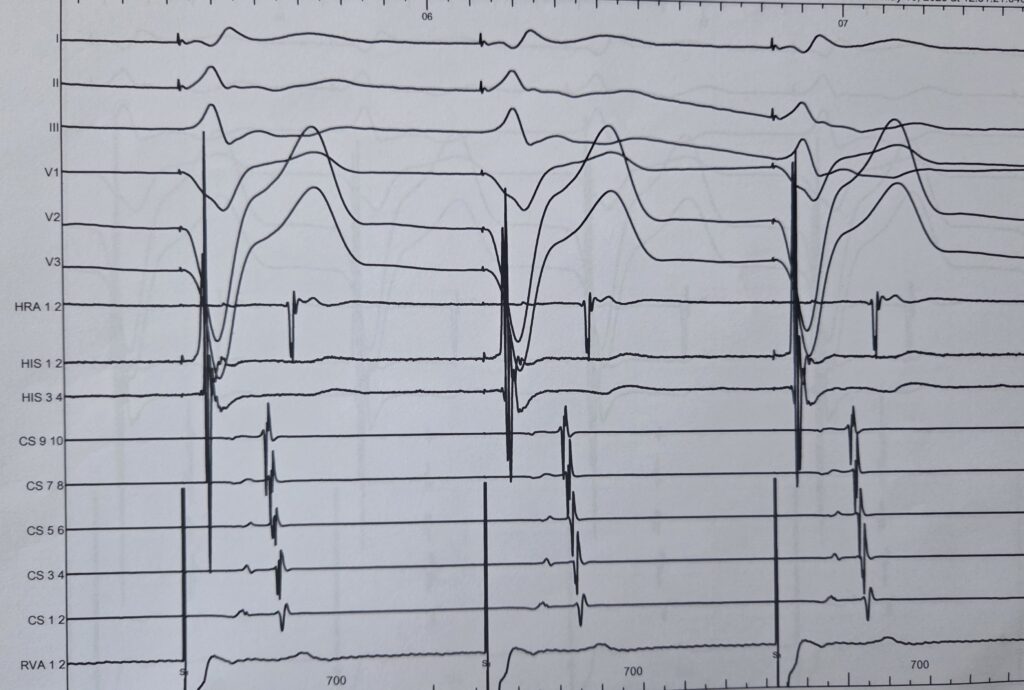
We entrain from the ventricule at 700 ms -> concentric activation

Normal

We entrain from the ventricule at 550 ms -> eccentric activation

Suggesting a Left Accessory Pathway

👀 Here’s what we’re seeing in this tracing:

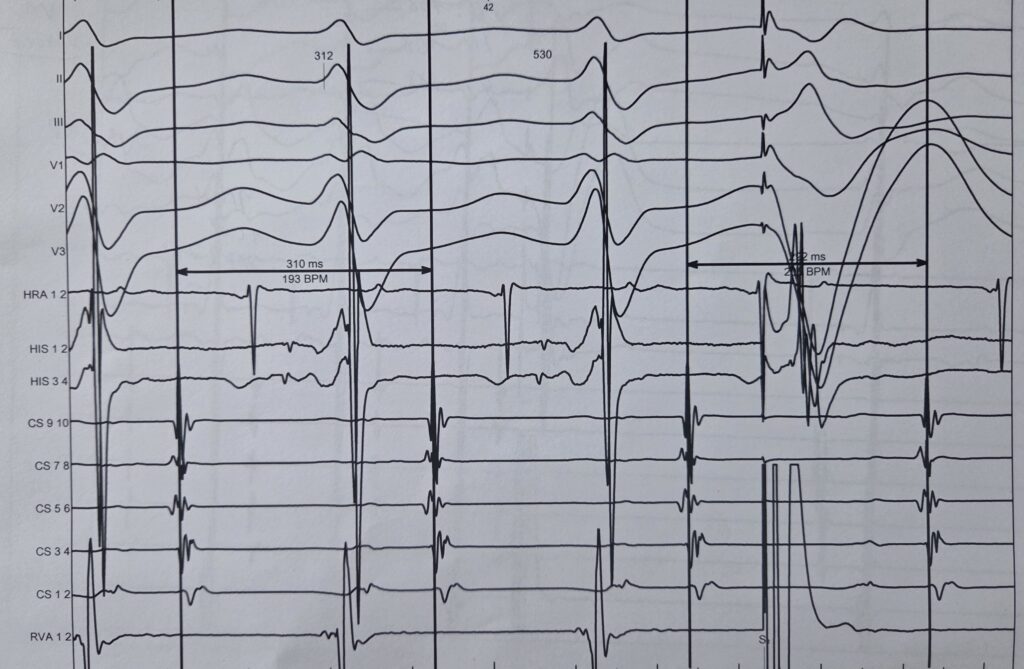
1️⃣ Tachycardia analysis:
Look closely at the last two QRS complexes—the RP interval is not short, strongly suggesting AVRT, atypical AVNRT or AT. 🫀

2️⃣ Extra-Ventricular pacing:
Therefore, we paced in the ventricle ⚡️ with an extrastimulus delivered within the refractory period of the His bundle ⏳, resulting in atrial advancement from 310 ms to 290 ms ⬅️.
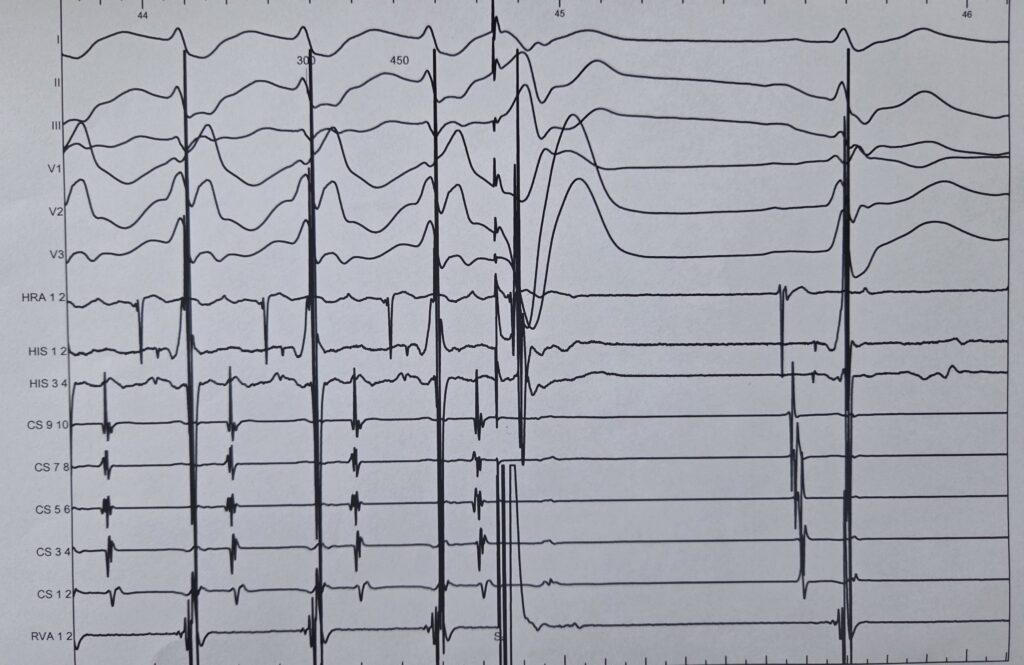
How does the tachycardia terminate? 🧐
It terminates with a ventricular extrastimulus ⚡️, thus excluding an atrial tachycardia as the mechanism 🚫

-> AVRT with a Left Accessory Pathway