Chronic coronary artery disease
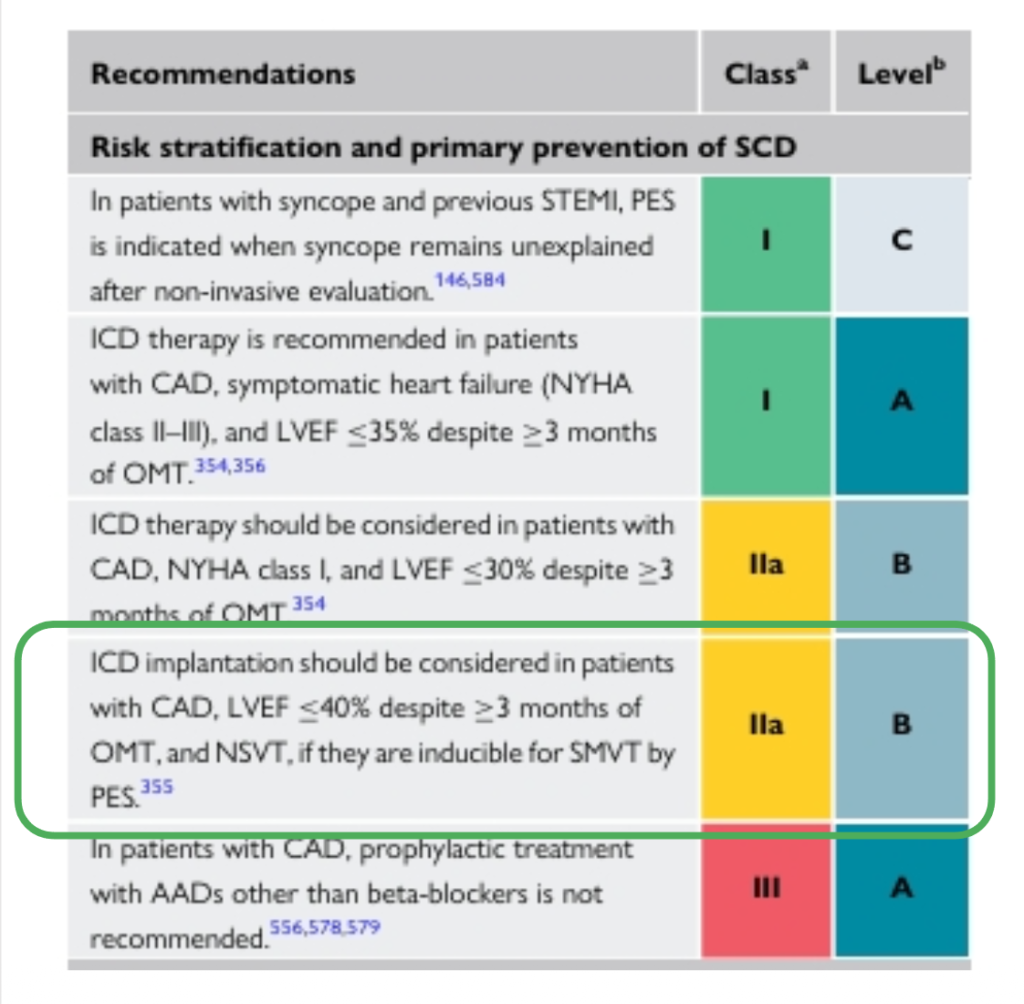
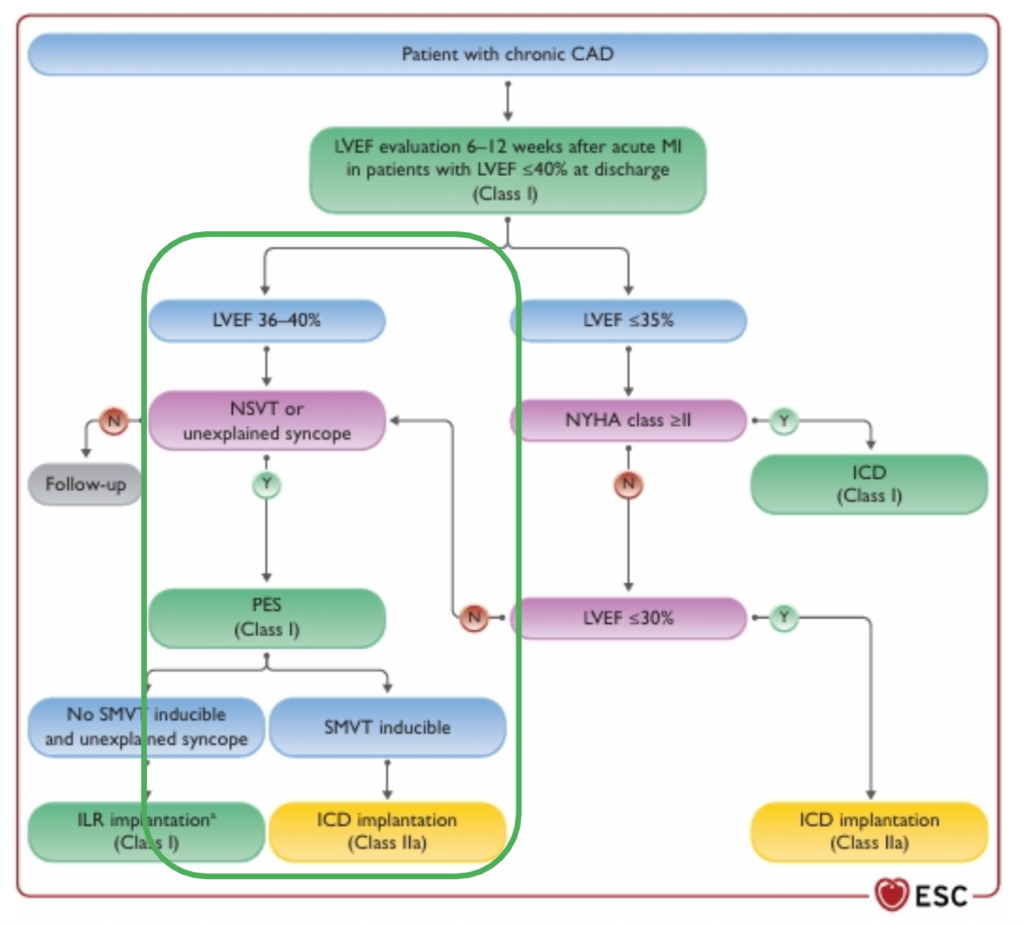
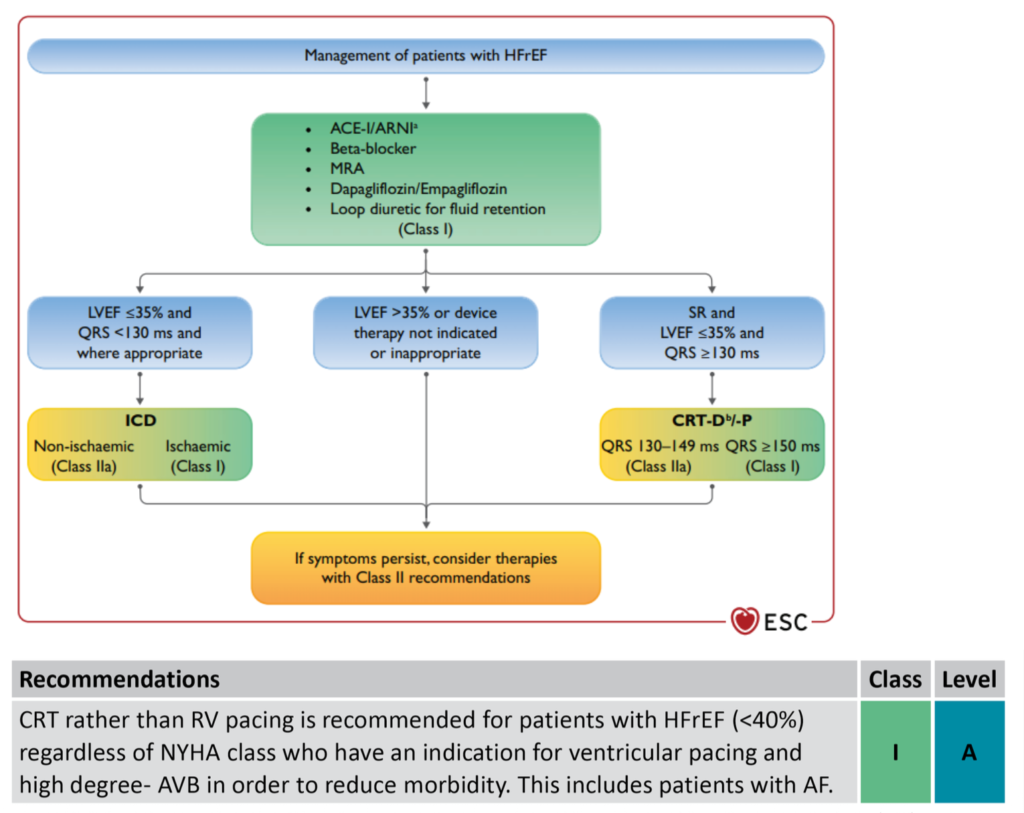
According to 2022 ESC guidelines on the prevention of sudden cardiac death, in patients with coronary artery disease, left ventricular ejection fraction <40%, NYHA I and non-sustained ventricular tachycardia an ICD should be considered (IIa) if one of the following criteria is met:
A. MRI shows transmural fibrosis (late gadolinium enhancement (LGE)) in at least 3 segments
B. There are 2 first-degree family members with sudden cardiac death
C. MRI shows a ventricular aneurysm and a reduced right ventricular function
D. Inducible ischemia in the LAD territory demostrated at non-invasive ischemia detection
E. Inducible for sustained monomorphic ventricular tachycardia at programmed
electrical stimulation
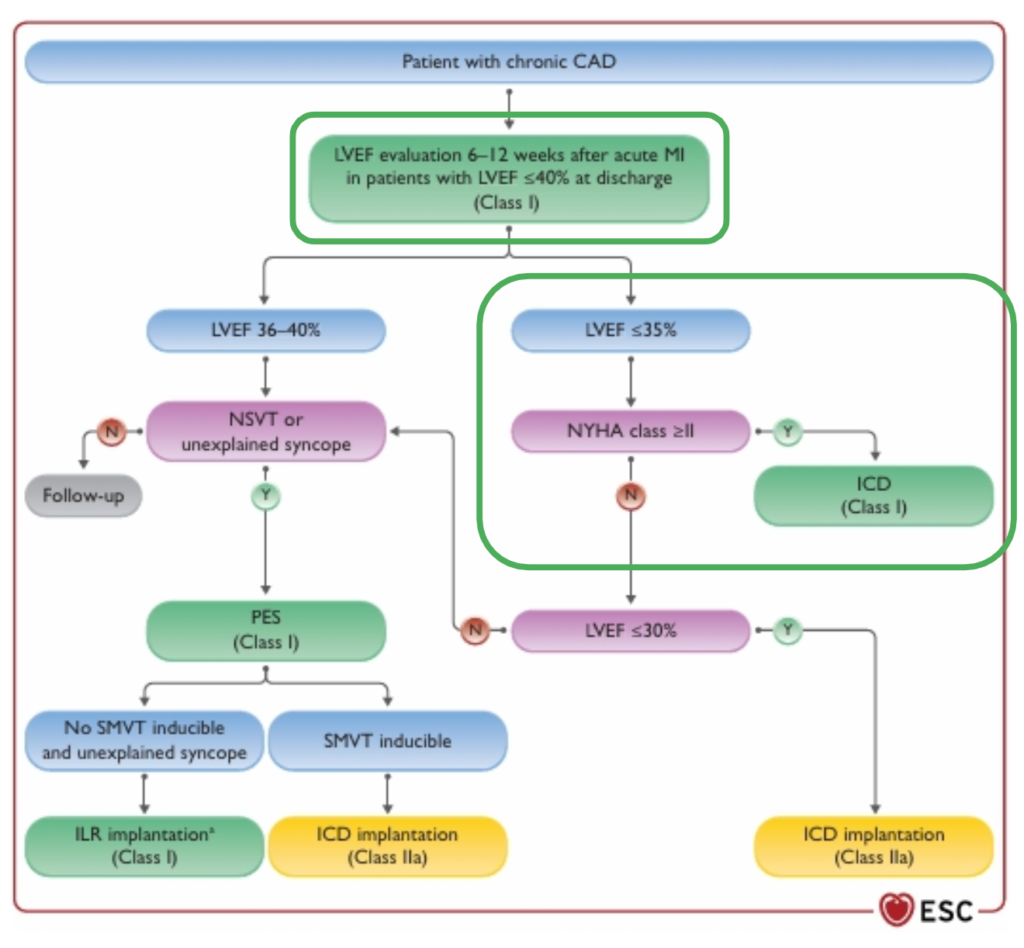
A 68-year-old man is seen 3 weeks after an acute ST-elevation myocardial infarction treated with primary PCI of the LAD. He is now clinically stable on optimal medical therapy. Echocardiography shows an LVEF of 31%. He has NYHA class II symptoms. He has no history of sustained ventricular arrhythmias or syncope. According to the 2022 ESC guidelines, what is the most appropriate management regarding ICD implantation?
A. ICD implantation for primary prevention
B. ICD implantation after 6 weeks if LVEF remains ≤35%
C. ICD implantation after 3 months of optimal medical therapy if LVEF remains ≤35%
D. ICD implantation is indicated only if non-sustained VT is present
E. ICD implantation is indicated only if inducible for fast VT