SVT already ablated

This is a 16-year-old patient who previously underwent catheter ablation for atypical AVNRT. The original tracings are not available. He now presents for a second opinion due to recurrent palpitations, and an electrophysiological study is performed.

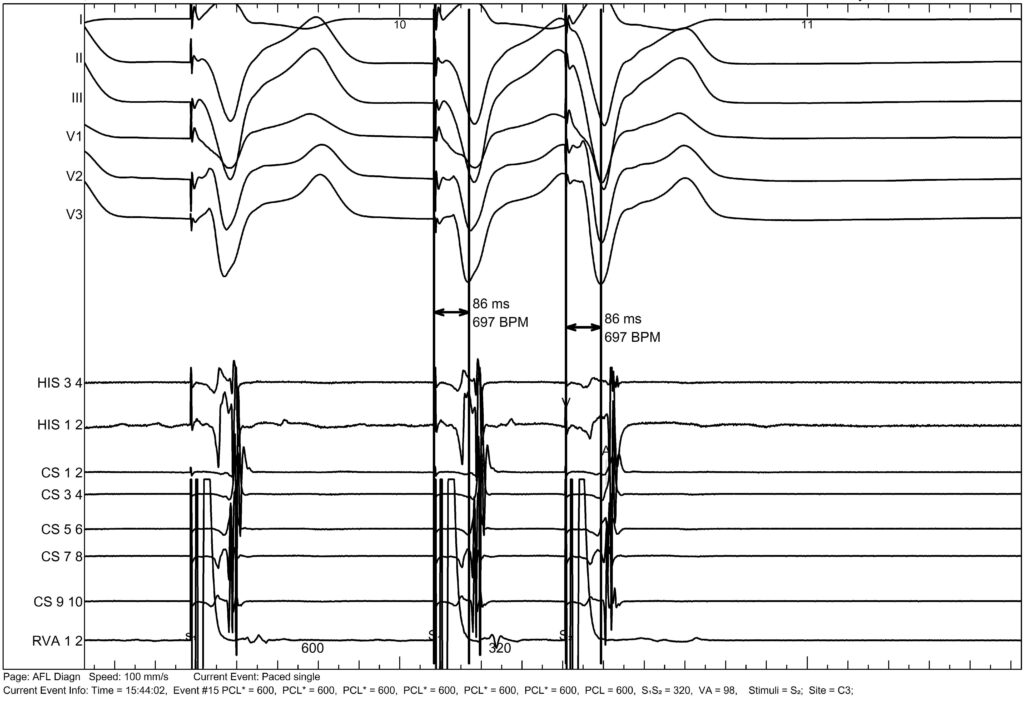
Ventricular pacing at a cycle length of 600 ms with a ventricular extrastimulus at 320 ms did not modify VA conduction, which remained at 86 ms, with earliest activation recorded at CS 7–8.

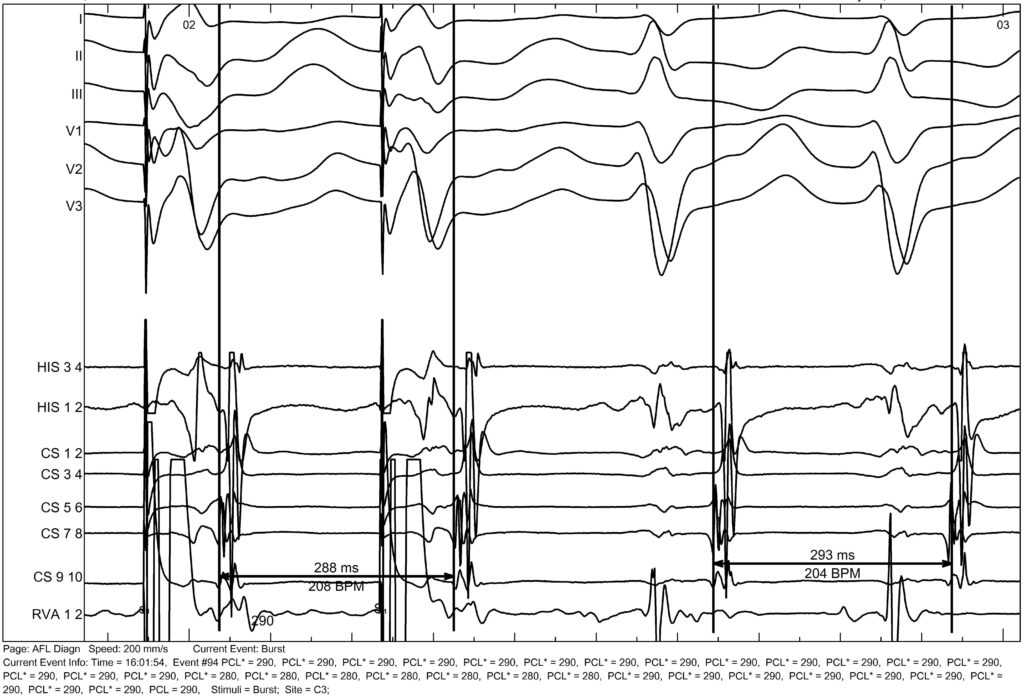
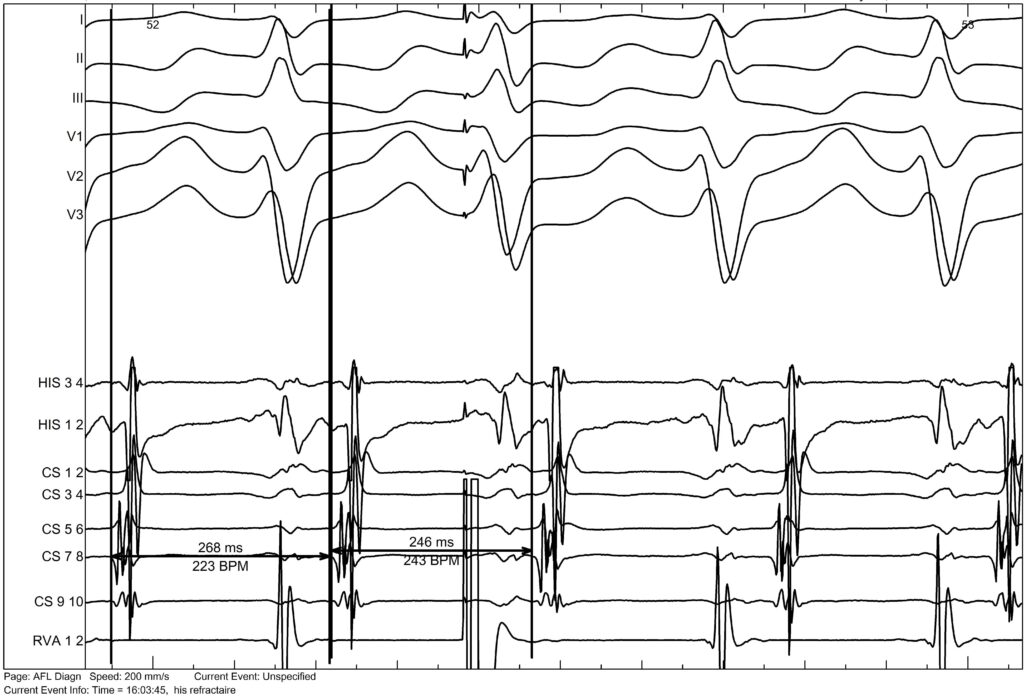
The tachycardia was induced with a long VA interval. Ventricular overdrive pacing resulted in a V-A-V response with a PPI–TCL < 110 ms, allowing exclusion of atrial tachycardia and AVNRT.

A ventricular extrastimulus delivered during tachycardia resulted in atrial advancement.

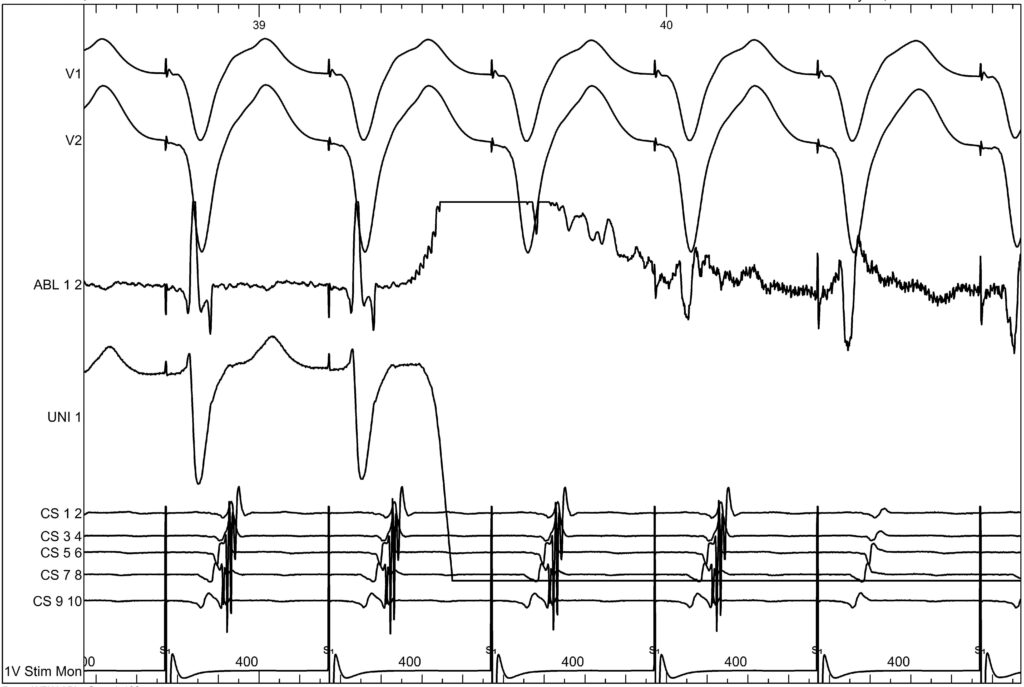
To ablate this concealed accessory pathway, ventricular pacing was performed. The His bundle was first identified, after which VA fusion was sought. Ablation was delivered at the posteroseptal region, resulting in disappearance of accessory pathway conduction within the first three seconds of energy delivery.

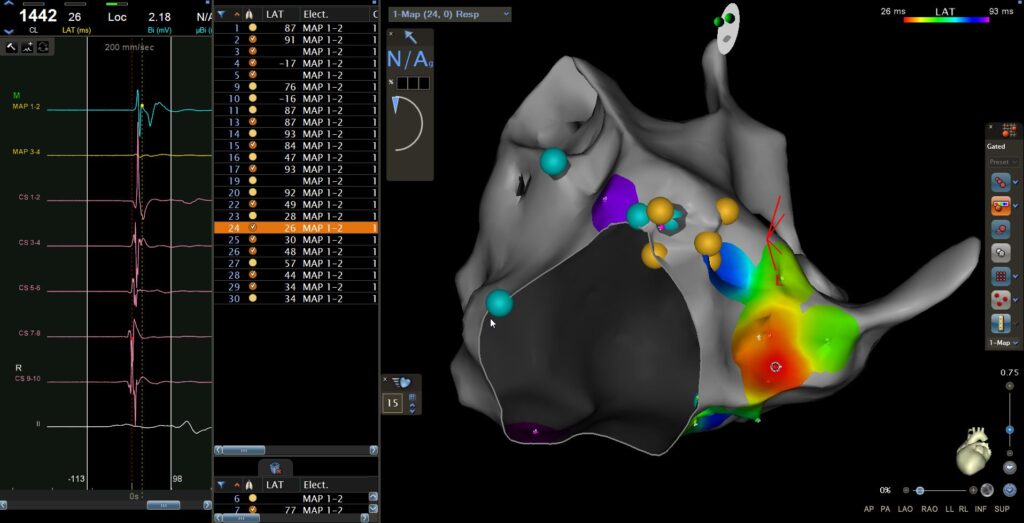
Here is an example of another patient presenting with Wolff–Parkinson–White, characterized by antegrade conduction over an accessory pathway with ventricular pre-excitation.

This patient also had a posteroseptal accessory pathway.